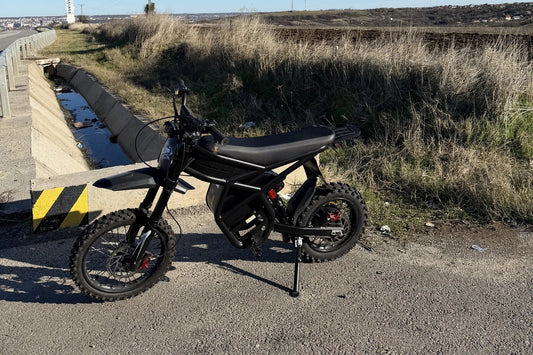
You pick the bike up, straighten the bars and roll it forward. Then you hear it: a scrape on every turn of the wheel, a rattle that wasn't there this morning, or a grinding sound from the back when the motor takes up the load.
A new electric dirt bike noise after a crash usually tells you where the impact went. Most come from parts that moved or bent, such as a brake rotor, brake caliper, fender, light bracket or a wheel that is no longer seated straight, and a careful inspection will often show you where. A grinding rear hub or a brake lever that feels different means the bike should stay parked until it has been checked, and any hissing, crackling, swelling, unusual smell or smoke from the battery needs the battery safety steps below straight away.
This post-crash inspection guide is written for our GT73 series and GT54 Pro electric dirt bikes. It shows what to check first, how to match each electric dirt bike noise to its likely cause, which checks you can do yourself and when to stop and contact our support team. Many of the checks apply to other electric dirt bikes too, but always follow the owner's manual for your model.
Check the rider and the battery first
Start with the person who was riding. Sore wrists, a knock to the head or a twisted knee can show up later, once the adrenaline wears off. If the helmet hit the ground hard, replace it before the next ride. Our guide to helmet safety explains why it matters on a bike this quick.
Then look at the battery, especially if the bike landed on that side. A hard impact can damage a lithium battery, so check it even if the crash seemed minor. Stop using or charging the battery if it develops an unusual smell, hissing or crackling, swelling, leaking or smoke. Keep people away and call 911 for signs of battery failure. Move the device away from flammable materials only if this can be done safely; do not put yourself at risk to remove it. Contact our support team after the immediate hazard has been addressed. These steps match the FDNY lithium-ion battery safety tips.
If the battery case is cracked or dented but shows none of those signs, don't charge it and contact our team before using it again. Please don't open the battery or try to ship it without guidance from us.
How to trace an electric dirt bike noise safely
With the bike switched off, lift the wheel you're checking off the ground. A stand works best. Spin the wheel by hand, keep your fingers clear of the rotor and spokes, and listen near the brake caliper, the fender and the hub.
Next, squeeze each brake lever, push down on the handlebars and seat to work the suspension, and rock each wheel sideways to feel for play. Turn the handlebars from lock to lock and watch for cables or hoses that pull tight.
Record a short video on your phone that captures the electric dirt bike noise with the sound on. It helps you compare the sound after each fix, and our support team may ask for one if you need help.
What you can check yourself, and where to stop
After a crash, separate looking and listening from adjusting or repairing:
- Checks anyone can do: the inspection above, plus looking for bent, cracked or loose parts and checking that the battery is seated and locked.
- Adjustments that need your model's procedure: re-seating a wheel, tightening axle nuts or bolts, or moving a fender or bracket away from a tire. Follow the steps and tightening guidance in your owner's manual, and ask us if you're unsure.
- Stop and contact us: brakes that feel or sound different, a bent rotor, a knock or movement at the front end, a bent fork or cracked frame, grinding from the rear hub, or damaged wiring. For battery warning signs, follow the safety steps above first.
What electric dirt bike noise after a crash usually means
The same sound can have more than one cause, so use these as starting points and confirm the cause before anyone rides.
| What you hear | Where or when | Likely cause | Ride it? |
|---|---|---|---|
| Scrape or swish once per wheel turn | At the brake, often louder when braking | Bent rotor, shifted caliper or wheel not seated straight | Not until the cause is fixed and the brakes are tested |
| Steady rubbing or ticking | Near a tire | Fender, number plate, light bracket or cable pushed against the tire | Once it's repositioned and clear |
| Rattle over bumps | Battery area, lights, kickstand | Loose bolt, battery not fully seated or locked, loose accessory | Once it's secured following your manual |
| Clunk when braking or hitting bumps | Front end or suspension | Loose steering head bearings (headset), fork or suspension mount, or frame damage | No, contact us |
| Grinding or rough hum | Rear hub, worse when the motor works | Motor axle, bearings or internal gearing | No, contact support |
| Beeping, error code or no power | Display and controls | Bent brake lever, loose connector or sensor fault | No, find the cause first |
| Hissing or crackling | Battery | Battery damage | Stop, keep people away and call 911 |
A scrape on every wheel turn
This is the most common electric dirt bike noise after a fall, because the brake rotor sits on the outside of the wheel and takes the hit first. Our GT73 series and GT54 Pro use hydraulic disc brakes front and rear, so even a slight bend can let the rotor touch a pad once per revolution.
Look for the simple causes first: a wheel that is no longer seated straight, or loose axle nuts, rotor bolts or caliper bolts. Re-seat the wheel or tighten those bolts only by following your model's procedure in the owner's manual. If the rotor itself is visibly bent, replace it rather than trying to straighten it, and contact us to confirm the correct rotor for your bike.
Before anyone rides, test both brakes at walking speed. If a lever feels soft, travels further than before or the bike pulls to one side when stopping, keep it parked.
Rubbing and rattles
Steady rubbing or ticking usually comes from a fender, the front number plate, a light bracket or a brake hose that got pushed toward a tire. Look for fresh scuff marks on the tire or on the inside of the fender to find the contact point. If a brake hose is kinked, stretched or damaged, keep the bike parked and contact us.
A rattle over bumps usually means something has worked loose. Check that the battery is fully seated and locked, then look for loose bolts on the lights, fenders, kickstand and handlebar clamps. Secure them using the steps and tightening guidance in your owner's manual. You'll find manuals and setup videos on our Assembly Videos & Manuals page.
A clunk from the front end
A clunk under braking or over bumps may point to movement in the steering head bearings (headset), fork or a suspension mount. Hold the front brake on and rock the bike forward and back. If you feel a knock or movement at the front, keep the bike parked: front-end adjustments need the correct procedure and tools, so contact us before riding.
Also check that the handlebars still line up with the front wheel and look for bent fork legs or cracks around the welds, especially near the steering head. A bent fork or cracked frame is not something to ride home on.
Grinding from the rear hub motor
Our GT73 series and GT54 Pro drive the rear wheel through a hub motor, so the motor sits on the rear axle. A hard side impact can affect the axle, the bearings or the motor's internal parts.
With the power off and the rear wheel lifted, spin it by hand. Roughness, a grinding feel, play when you rock the wheel sideways or a scraping sound from inside the hub are reasons to stop riding. Please don't open the motor yourself, because unauthorized disassembly is excluded from our warranty.
Beeping, error codes or no power
If the display beeps or shows an error code after the crash, check the controls and wiring. A bent brake lever or a connector that was pulled loose is a common cause. Our electric dirt bikes use brake cutoffs, which stop motor power when a brake lever is pulled. If a lever got bent inward and no longer returns fully, it can keep that cutoff active and the motor may not respond.
Check that both levers spring back fully. If a lever is bent or doesn't return on its own, contact us for the correct replacement. Then switch the bike off, remove the battery and look for unplugged, pinched or stretched wiring around the handlebars and along the frame. If your GT73 display shows a code, our guide to GT73 error codes explains E06, E07, E08, E10 and E11 and the first checks for each.
Getting help from our team
Contact us before the next ride if you can't trace the electric dirt bike noise to a simple cause, or if it involves the brakes, front end, rear hub motor or battery. To identify the problem and the correct parts for your model and production batch, our technical team may ask for:
- a short video that captures the electric dirt bike noise
- clear photos of the damaged parts and their connections
- your bike's serial number, and the motor serial number or identification code if requested
- your original order number
Our warranty covers manufacturing defects, and accidents are listed among its exclusions, so crash damage is generally not covered. Our team can still help you work out what was damaged and which parts fit your model and production batch, and you can browse common replacements in our Other Parts & Accessories collection.
Back on the trail
An electric dirt bike noise after a crash deserves a proper look, but it doesn't always mean a big repair. Once the rider and battery are safe, a careful inspection usually shows where the sound is coming from. If it leads you to the brakes, front end, hub motor or battery, send us the video before the bike goes back on the trail.
Frequently asked questions
Can I ride home if my electric dirt bike is making a noise after a crash?
Only if you've traced the electric dirt bike noise to something minor, such as a fender touching the tire, and fixed it. If the sound comes from the brakes, steering, rear hub motor, frame or battery, or you can't tell where it's coming from, walk the bike home or arrange a pickup.
Will the electric dirt bike noise go away on its own?
Usually not. A sound caused by a bent rotor, a loose bolt or a part rubbing the tire stays until the cause is fixed, and a rubbing part can wear the tire, brake pads or rotor in the meantime.
My bike sounds normal after a crash. Should I still check it?
Yes. Not every problem causes an electric dirt bike noise. Before riding, check that both brakes work normally, the handlebars line up with the front wheel, the wheels spin straight and the battery case shows no damage.
Can a local bike shop repair my Riding'times after a crash?
Contact us first. Our team can help confirm what was damaged and which parts fit your model and production batch. Repairs by unauthorized technicians are listed as a warranty exclusion, so check with us before anyone works on parts that may still be covered.
Can I order replacement parts myself?
Yes. If you've traced the electric dirt bike noise to a bent rotor, a broken bracket or another damaged part, many common replacements are listed in our Other Parts & Accessories collection. Parts are sold as final sale and can differ between production batches, so send us photos and your bike's serial number to confirm the right part before you order.
Is it safe to charge the battery after a crash?
Not until you've checked it. If the battery has an unusual smell, hissing or crackling, swelling, leaking or smoke, stop using it, keep people away and call 911. If the case is cracked or dented, or the battery took a direct hit, don't charge it until our team has advised you.