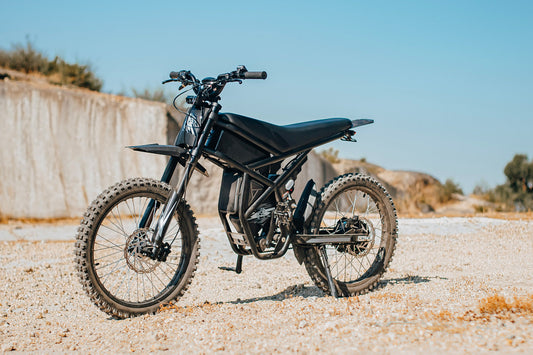
If you have ever wondered whether you can convert a motorcycle-style electric bike to use bicycle pedals, you are not alone. It is one of the most common questions riders ask, especially when looking at models like the Riding Times GT73 and GT54 series. The short answer is that converting a motorcycle-style electric bike to bicycle pedals requires a lot more than just installing a chain. Here is everything you need to know before attempting it.

Why Converting a Motorcycle-Style Electric Bike Takes More Than a Chain
Many riders assume that adding a chain is all it takes to make pedals work on a motorcycle-style electric bike. In reality, a functional pedal system requires a complete bicycle drivetrain, not just a chain. Without the right components working together as a system, the pedals either cannot drive the rear wheel at all or will cause chain slipping, misalignment, and rapid wear.
The key reason is simple. Motorcycle-style electric bikes are built around foot pegs, not bicycle drivetrains. The frame, motor, and rear hub are designed for a completely different setup, which means adding pedals is not a plug and play process.
Is Converting a Motorcycle-Style Electric Bike to Pedals Worth It ?
To convert a motorcycle-style electric bike to bicycle pedals, you need all of the following components working together:
Bottom bracket: The frame must have a bottom bracket shell or be modified to accept one. This is the interface that connects the crank arms to the frame.
Crankset and pedals: Left and right crank arms plus standard bicycle pedals with a 9/16 inch thread.
Front chainring: Typically between 44T and 52T, matched to the crankset and chain type.
Bicycle chain: Either 1/8 inch for single speed or 3/32 inch for multi-speed, matched to the rear freewheel or cassette.
Rear freewheel or cassette: Single or multi-speed, and critically, the rear motor must support a freewheel or cassette interface. Many motorcycle-style hub motors do not.
If any one of these parts is missing or incompatible, the conversion will not work as intended.
The Biggest Obstacle: Motor and Frame Compatibility
This is where most conversions run into serious problems. Converting a motorcycle-style electric bike to bicycle pedals depends heavily on whether the rear hub motor supports a freewheel or cassette interface. Motorcycle-style hub motors are typically not designed for this, which means there is no proper way to connect a standard bicycle drivetrain without significant custom work.
Frame structure also creates challenges. Standard bicycle drivetrains are built around rear dropout widths of 135 mm or 142 mm. Motorcycle-style electric bikes often use wider frames and different hardware, which can cause chain alignment problems and may require custom spacers, brackets, or fabrication.
Other Components Riders Often Overlook
Even if the main drivetrain is sorted, a successful conversion still needs additional parts and adjustments:
Chain tensioner: Required for single-speed setups to prevent chain slack and derailment.
Pedal clearance: Depending on the frame, adding cranks and pedals may conflict with suspension travel, rider position, or nearby frame components. Custom mounting solutions are sometimes needed.
Chain guard: Prevents clothing from getting caught in the drivetrain and improves safety.
Pedal Assist Sensor (PAS): If the goal is motor-assisted pedaling, a PAS sensor is also needed. Without it, pedaling will not activate motor assist the way riders expect from a standard eBike. The controller must also be compatible with PAS input, and many motorcycle-style controllers are not.
Riding Times Bikes That Already Come With Pedals
The good news for Riding Times riders is that several models in the GT series already come with pedals built in. The GT73 and GT73 Pro both include pedals as part of their factory design, which means they can qualify as pedal-assist electric bikes in states where pedal functionality is required for road use. Riders operating at the lowest speed setting may also find the pedals helpful for meeting local regulations without needing any modification.
This is one of the reasons the GT73 series is such a versatile choice. You get motorcycle-style performance and design with the option of genuine pedal functionality from day one, without the cost and complexity of a custom conversion.
The GT54 is a little different, since it comes with pedals but no chain, so it is not set up as a traditional pedal-drive bike. That makes it important to check the exact model before assuming all GT series bikes work the same way.
Safety and Legal Considerations
Converting a motorcycle-style electric bike to bicycle pedals can also affect how the vehicle is classified legally. In many regions, pedals must be fully functional and capable of independently propelling the bike for the vehicle to qualify as a pedal-driven eBike. Decorative or non-functional pedals typically do not satisfy these requirements.
Rules vary significantly by country, state, and region, so always check local regulations before attempting a conversion. Mechanical feasibility and legal classification are two separate things and both matter.
Is a Pedal Conversion Worth It?
For most motorcycle-style electric bikes, a full pedal conversion is not practical. The cost of parts, custom fabrication, motor compatibility issues, and reliability concerns add up quickly. In many cases the total cost approaches or exceeds the price of buying a factory-built pedal-assist eBike that already has a proper drivetrain built in.
If you specifically want true pedal functionality, the practical recommendation is to choose a bike designed for pedals from the start. Riding Times models like the GT73 and GT73 Pro are built with this in mind, giving riders real pedal capability without the hassle of a custom conversion.
For riders who want to explore the full Riding Times lineup and understand which models include pedals, the Riding Times YouTube channel has detailed unboxing and setup videos for every GT series model.
The Bottom Line
Converting a motorcycle-style electric bike to bicycle pedals requires a complete bicycle drivetrain, a compatible rear motor, proper frame structure, correct chain alignment, and often a Pedal Assist Sensor too. It is not just a chain. For most riders, choosing a bike that already comes with pedals built in is the smarter, more reliable, and more cost-effective option.