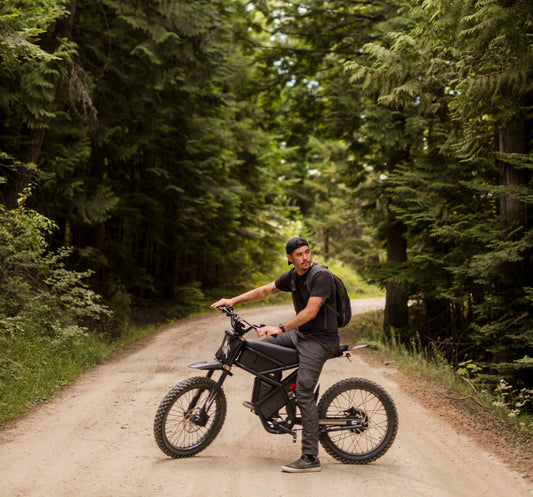
Integrated Geared Hub for Electric Bikes: Power That Moves with You
A steep street should not decide where your ride ends. A heavy backpack should not make every stoplight feel like a struggle. And when the road turns from smooth pavement to uneven trail, your electric bike should respond with the power and control to keep you moving.
That is the purpose behind Riding Times electric bikes, electric dirt bikes, and high performance electric motorbikes. From the compact GT54 and GT54 Pro to the dual battery electric dirt bike lineup of GT73 and GT73 Pro, Riding Times builds e-bikes for riders who want stronger starts, confident climbs, and direct rear-wheel power on every kind of route.
At the centre of that riding experience is the integrated geared hub. This wheel-integrated motor system uses internal reduction gearing to turn fast motor rotation into useful wheel-driving force. The result is responsive power that riders can feel when starting from a stop, accelerating with cargo, climbing a hill, or taking an off-road electric bike beyond the pavement.
Whether you are searching for an electric bike for daily travel, an electric dirt bike with pedals for longer adventures, or a high performance electric motorbike for more demanding terrain, Riding Times helps put powerful, direct-to-wheel assistance within reach. Explore the Riding Times electric bike collection to find the model built for your next ride.
What Is an Integrated Geared Hub?
An integrated geared hub is an electric bike drive system that combines an electric motor and internal reduction gearing within the wheel-drive assembly. The motor spins at a higher rotational speed, while the internal gears reduce the output speed and increase the turning force delivered to the wheel.
Electric motors can run efficiently at higher rotational speeds, but an e-bike wheel needs lower rotational speed and greater turning force. Internal reduction gearing converts fast motor rotation into slower wheel rotation with increased torque. This helps provide practical wheel force for starts, acceleration, climbing, and riding with extra weight.
For Riding Times electric bikes, the integrated geared hub concept is about delivering performance that riders can feel. The system is designed to provide direct wheel power rather than relying only on a motor wattage claim.
The benefits are especially relevant when riding conditions demand more from the electric bike:
- Pulling away from traffic lights or trail stops.
- Starting on a slope.
- Climbing hills and ramps.
- Riding with a backpack, tools, or cargo.
- Managing uneven terrain and loose surfaces.
- Maintaining momentum during stop-and-go riding.
How the Integrated Geared Hub Works
The Riding Times integrated geared hub uses internal reduction gearing to match motor speed to the needs of the wheel. Rather than sending high-speed motor rotation directly to the wheel, the internal gear system reduces output speed and increases usable turning force.
A 5.2:1 internal reduction ratio means the motor rotates approximately 5.2 times for every one rotation of the wheel. This reduction process converts speed into torque, which is the turning force that helps move the electric bike forward.

Think of it like selecting a lower gear when riding uphill. The wheel turns at a manageable speed, but more turning force is available to help overcome resistance. In the same way, the integrated geared hub is designed to make motor output more useful when the e-bike is starting, climbing, carrying weight, or moving over demanding terrain.
This does not mean that every Riding Times model uses identical internal components, gear materials, motor windings, or reduction ratios. Motor output, controller tuning, battery voltage, torque, and internal design vary by electric bike model. The shared design principle is to provide direct wheel-powered assistance through rear hub motor systems configured for each model’s intended use.
Strong Starts and Confident Climbing
The value of an integrated geared hub is most noticeable at lower speeds. Starting from a stop or climbing an incline requires useful wheel force, not simply fast motor rotation.
Riding Times electric bikes use rear hub motor systems that are designed to support responsive starts and controlled acceleration. This can help riders move away from a junction, restart after slowing down, manage a hill, or continue riding when carrying equipment.
For off-road electric bikes and electric dirt bikes, direct rear-wheel assistance can also help riders maintain momentum across changing ground conditions. Loose dirt, packed trails, gravel, ramps, and uneven surfaces can all increase resistance. A wheel-integrated motor system helps deliver assistance directly where forward movement happens.
The practical benefits include:
- Stronger starts from a standstill.
- Smooth, controlled low-speed acceleration.
- Useful support while climbing.
- More confidence with rider gear or cargo.
- Direct rear-wheel power for street, trail, and off-road riding.
Real performance will always depend on the rider, model, selected power mode, battery condition, terrain, tire pressure, rider weight, cargo, weather, and local speed settings. However, the integrated geared hub principle is designed to help turn available motor power into usable wheel force.
More Than a Wattage Number
When shopping for electric bikes, it is easy to focus only on motor wattage. Wattage matters, but it is not the only factor that determines how an electric bike, electric motorbike, or electric dirt bike performs.
How the motor power reaches the wheel is equally important. A complete e-bike system includes the motor, internal gearing, controller, battery, tire setup, vehicle weight, rider input, and terrain. Each of these elements affects acceleration, hill-climbing response, range, and ride feel.
The Riding Times integrated geared hub approach focuses on real riding response. It is designed to convert motor speed into wheel-driving force, so riders can feel useful assistance when they start, climb, carry gear, or ride through changing conditions.

For riders comparing an electric bike with a high performance electric motorbike, the best choice is not always the model with the biggest power number. It is the model that fits the rider’s intended terrain, distance, battery needs, comfort preferences, and local riding requirements.
Riding Times Integrated Geared Hub Models
Riding Times offers electric bikes, electric motorbikes, and electric dirt bikes for riders with different power needs and riding goals. The GT54, GT54 Pro, GT73, and GT73 Pro use rear hub motor configurations, with motor output, battery configuration, torque, and performance designed around their individual product categories.
The following table gives a simple overview of how these Riding Times models fit into the range.
| Model | Best For | Power and Battery Positioning | Integrated Geared Hub Context |
|---|---|---|---|
| GT54 | Compact electric motorbike and recreational electric dirt bike riding | 2000W peak motor, 48V battery, 290 Nm stated torque | Rear hub motor system built for compact, high-torque performance |
| GT54 Pro | Riders seeking a higher-output mini electric motorbike | 3000W peak motor, 60V battery, 338 Nm stated torque | Higher-output rear hub motor configuration for more demanding riding |
| GT73 | Dual battery electric dirt bike with pedals | 2400W motor and dual-battery electric bike configuration | Rear geared hub motor with pedal-assist capability |
| GT73 Pro | High performance electric motorbike and off-road electric bike riding | 3000W brushless hub motor and dual-battery configuration | Rear geared hub motor system designed for higher-output performance |
Integrated Geared Hub vs Direct-Drive Hub
Not every hub motor works in the same way. A direct-drive hub motor connects motor rotation more directly to the wheel. An integrated geared hub uses internal reduction gearing to reduce motor speed and increase the turning force delivered to the wheel.
| Feature | Integrated Geared Hub | Direct-Drive Hub Motor |
|---|---|---|
| Motor location | Integrated into the wheel-drive assembly | Located in the wheel hub |
| Internal gearing | Uses reduction gearing to convert motor speed into wheel force | Typically does not use internal reduction gearing |
| Low-speed response | Designed for stronger starts and useful climbing support | Depends on motor, controller, battery, and riding conditions |
| Wheel power delivery | Converts motor rotation into direct wheel-driving force | Transfers motor output more directly to the wheel |
| Riding Times application | Used in rear geared hub configurations on selected models | A different hub-motor design approach |
A mid-drive motor uses another design approach, placing the motor near the pedals and transferring power through the e-bike drivetrain. This can be useful for some sustained steep-climb applications because the motor works through the available gears.
The Riding Times integrated geared hub approach offers a different set of advantages: wheel-integrated packaging, direct rear-wheel assistance, and internal gearing designed to provide usable low-speed wheel force. The ideal drive system depends on terrain, rider expectations, maintenance preferences, ride distance, and intended use.
Choose Your Riding Times Electric Bike
Riding Times electric bikes are built for a variety of riding goals—from compact electric motorbike fun to electric dirt bike adventures, pedal-assisted travel, and high-performance off-road riding.
The integrated geared hub supports the Riding Times focus on direct wheel power. It helps turn motor rotation into usable force for stronger starts, controlled acceleration, and confident hill riding. From the GT54 and GT54 Pro to the GT73 and GT73 Pro, each electric bike is designed with its own power level, battery configuration, and riding purpose.
Use the Riding Times model comparison tool to compare electric bikes, battery options, motor specifications, dimensions, and key features before selecting the right model for your next ride.